Natural vs. Synthetic Rubber Bands (EPDM, Silicone): Which Should You Buy?
Key Takeaways
- Natural rubber bands offer the highest elasticity and lowest cost, stretching to at least 600% while remaining biodegradable.
- EPDM bands resist UV, ozone, and weathering far better, making them suited to years of continuous outdoor exposure.
- Silicone bands tolerate extreme temperatures but cost several times more and grip less strongly than natural rubber.
- Compound bands blending 60-100% natural rubber balance elasticity, UV resistance, and price for demanding outdoor applications.
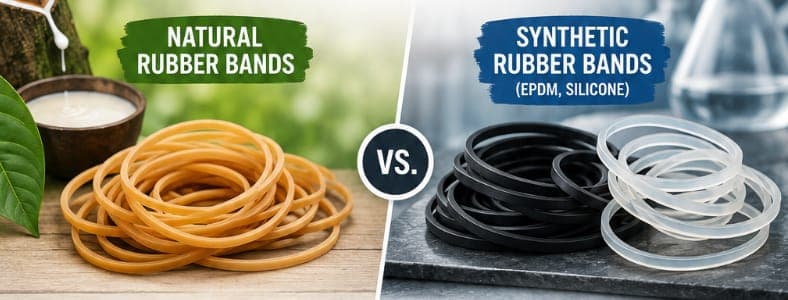
Table of Contents
- What Is the Difference Between Natural and Synthetic Rubber?
- Natural vs. Synthetic: Side-by-Side Comparison
- When Are Natural Rubber Bands the Better Choice?
- Choose natural rubber when:
- When Do Synthetic Bands Make Sense?
- Synthetics earn their premium in environments that destroy natural rubber:
- What About Latex Allergies?
- How Do the Costs Compare?
- Which Material Is More Sustainable?
- The Middle Ground: Compound Natural Rubber Bands
- How to Specify the Right Band
- A simple decision path for buyers:
If you are sourcing rubber bands in bulk, the first specification decision is not size or color - it is material. Whether procuring wholesale natural rubber packaging bands for high-volume warehousing or engineering custom OEM rubber band specifications, natural rubber, EPDM, and silicone bands look similar on a shelf but behave very differently under stretch, sunlight, temperature, and time. Choosing the wrong material is the most common reason bands snap on the production line or crumble on the store shelf.
This guide compares natural and synthetic rubber bands across the properties that matter to B2B buyers: elasticity, strength, weather resistance, temperature range, allergy considerations, cost, and sustainability.
What Is the Difference Between Natural and Synthetic Rubber?
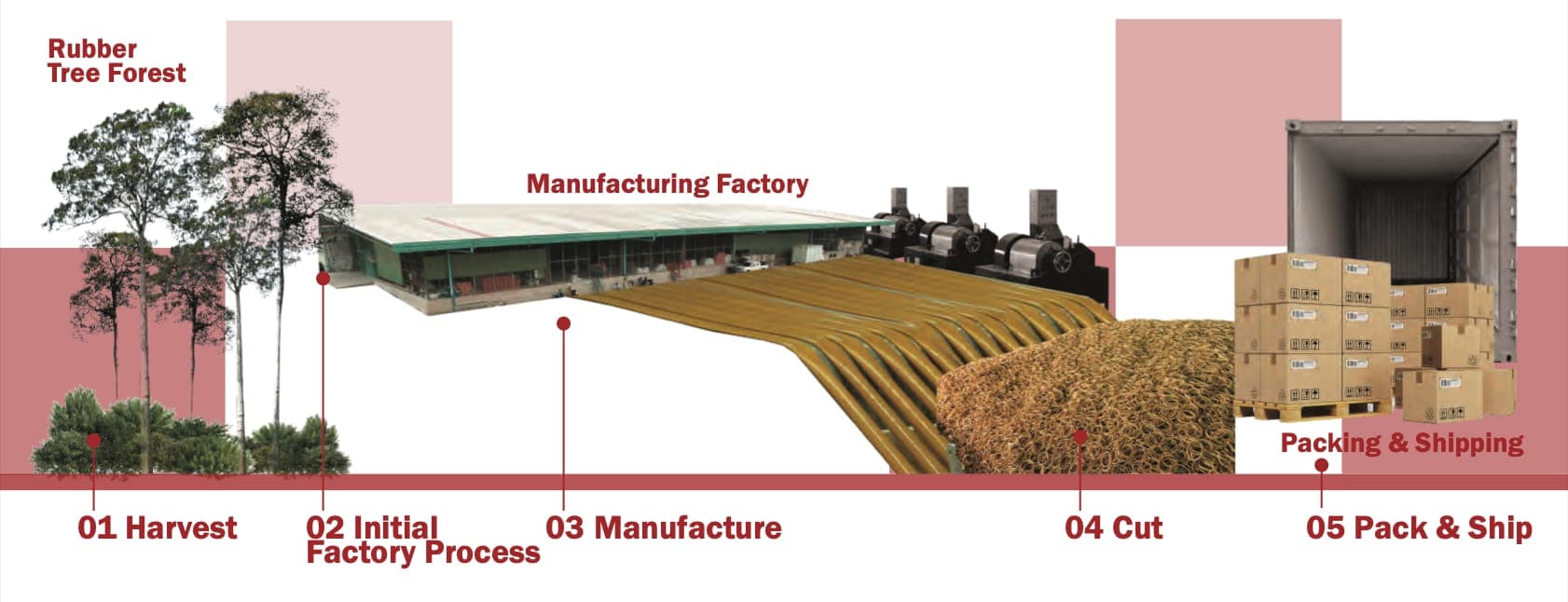
Natural rubber is made from latex tapped from the Hevea brasiliensis tree. Its polymer, cis-1,4-polyisoprene, has a molecular structure that no synthetic process fully replicates - long, flexible chains that give natural rubber its signature combination of extreme elasticity and elastic memory (the ability to snap back to original shape thousands of times). Thailand produces roughly one-third of the world's supply, which is why most of the world's high-elasticity rubber bands are made there.
Synthetic rubbers are engineered from petroleum-derived monomers. The two you will encounter in band form are:
- EPDM (ethylene propylene diene monomer): a weather-resistant elastomer used in automotive seals and roofing. EPDM bands trade elasticity for outstanding UV, ozone, and heat resistance.
- Silicone: a silicon-oxygen polymer that stays flexible across an extreme temperature range and is available in food-contact grades, at a significantly higher price.
Natural vs. Synthetic: Side-by-Side Comparison
| Property | Natural Rubber | EPDM | Silicone |
|---|---|---|---|
| Elongation at break | Highest (600%+) | Moderate (300-600%) | Moderate (200-700%) |
| Elastic memory / snap-back | Excellent | Fair | Fair |
| Tensile strength | High | Moderate | Low-moderate |
| UV and ozone resistance | Poor-fair | Excellent | Excellent |
| Typical service temperature | Approx. -20 C to +70 C | Approx. -40 C to +120 C | Approx. -60 C to +200 C |
| Oil and grease resistance | Poor | Poor | Fair |
| Latex allergy risk | Contains latex proteins | Latex-free | Latex-free |
| Biodegradability | Biodegradable | Not biodegradable | Not biodegradable |
| Relative cost | Lowest | Higher | Highest (several times NR) |
When Are Natural Rubber Bands the Better Choice?
For most packaging, bundling, and logistics applications, natural rubber wins on the numbers. A quality natural rubber band stretches to at least 600% of its resting length and returns to shape with more holding force than any synthetic alternative at the same price. That is why the default choice for produce bundling, mail and document handling, warehouse kitting, and retail packaging remains the natural rubber band.
Choose natural rubber when:
- Elasticity is the job. Nothing grips irregular shapes - vegetable bunches, folded cartons, rolled textiles - like high-content natural rubber.
- Cost per band matters. At bulk volumes, natural rubber delivers the lowest cost per use of any elastomer.
- Sustainability is a purchasing criterion. Natural rubber is a renewable, plantation-grown material, and unmodified bands biodegrade in soil - unlike petroleum-based EPDM and silicone, which persist like other plastics.
- The band works indoors or in short outdoor cycles. Days to weeks of sun exposure is fine; years are not.
When Do Synthetic Bands Make Sense?
Synthetics earn their premium in environments that destroy natural rubber:
- Permanent outdoor exposure. EPDM shrugs off UV and ozone for years, which is why it is used for outdoor cable management, tarpaulin tie-downs, and rooftop equipment. A natural band in the same role would surface-crack within months.
- Extreme temperatures. Freezer-to-oven cycling, autoclave sterilization, or engine-bay heat call for silicone, which stays flexible from deep-freeze conditions to well above boiling.
- Direct food or medical contact. Certified food-grade or medical-grade silicone bands exist for regulated direct-contact uses. Note that standard natural rubber bands - including ours - are suitable for food-adjacent tasks such as bundling packaged produce.
- Latex-sensitive environments. Hospitals and some food processors specify latex-free elastomers to protect allergic staff.
What About Latex Allergies?
Natural rubber contains proteins that can trigger Type I latex allergy in sensitized individuals - the reason medical gloves moved to nitrile. For rubber bands, casual contact is a low-exposure scenario, but workplaces with known latex-allergic staff or latex-free policies should specify EPDM or silicone bands instead. If your buyers ask, be direct about the material: latex-free means synthetic.
How Do the Costs Compare?
Natural rubber is consistently the most economical elastomer per unit of performance. EPDM bands typically cost meaningfully more than natural rubber at equivalent dimensions, and silicone bands several times more. For high-volume operations - a produce packer using millions of bands per season - the material choice compounds into a significant budget line. The practical rule: pay for synthetics only where their specific resistance (UV, temperature, latex-free) is genuinely required, and use natural rubber everywhere else.
Which Material Is More Sustainable?
Natural rubber is one of the few industrial materials that is genuinely renewable: Hevea trees produce latex for 20-25 years while absorbing carbon, and plantation timber is harvested afterward. Unmodified natural rubber products biodegrade in soil within a few years. EPDM and silicone are petroleum- and silica-derived polymers that do not biodegrade and are rarely recycled in band form. For companies with plastic-reduction targets, replacing stretch film with reusable natural rubber pallet bands is one of the simplest packaging wins available.
The Middle Ground: Compound Natural Rubber Bands
The choice is not strictly binary. Compound bands blend natural rubber with polymers and protective additives, tuning the balance between elasticity and weather resistance. At Maruey Rubber we manufacture bands in natural rubber contents from 60% to 100%: full-latex grades for maximum stretch and snap-back, and compound grades with improved UV tolerance and cost efficiency for agricultural field use. Most outdoor agricultural buyers land on a compound grade rather than a full synthetic - it keeps most of the elasticity at a fraction of the synthetic price. Our OEM service can match the compound to your application and climate.
How to Specify the Right Band
A simple decision path for buyers:
- Indoor bundling, packaging, office, logistics: 100% natural rubber - best stretch, lowest cost.
- Outdoor use for weeks to months (agriculture, nurseries): compound natural rubber (60-90% content) with UV-resistant formulation.
- Outdoor use for years, or temperatures beyond -20 C to +70 C: EPDM.
- Extreme temperatures, certified direct food contact, or latex-free mandates: silicone.
Maruey Rubber has manufactured natural and compound rubber bands in Thailand since 1992, exporting to more than 60 countries with every batch mechanically tested for elongation and tensile strength. If you are unsure which grade fits your application, contact our team - we will recommend a specification and send free samples so you can test them in your own process.
Related Product
Rubber Band
The industry standard for versatile bundling and packaging
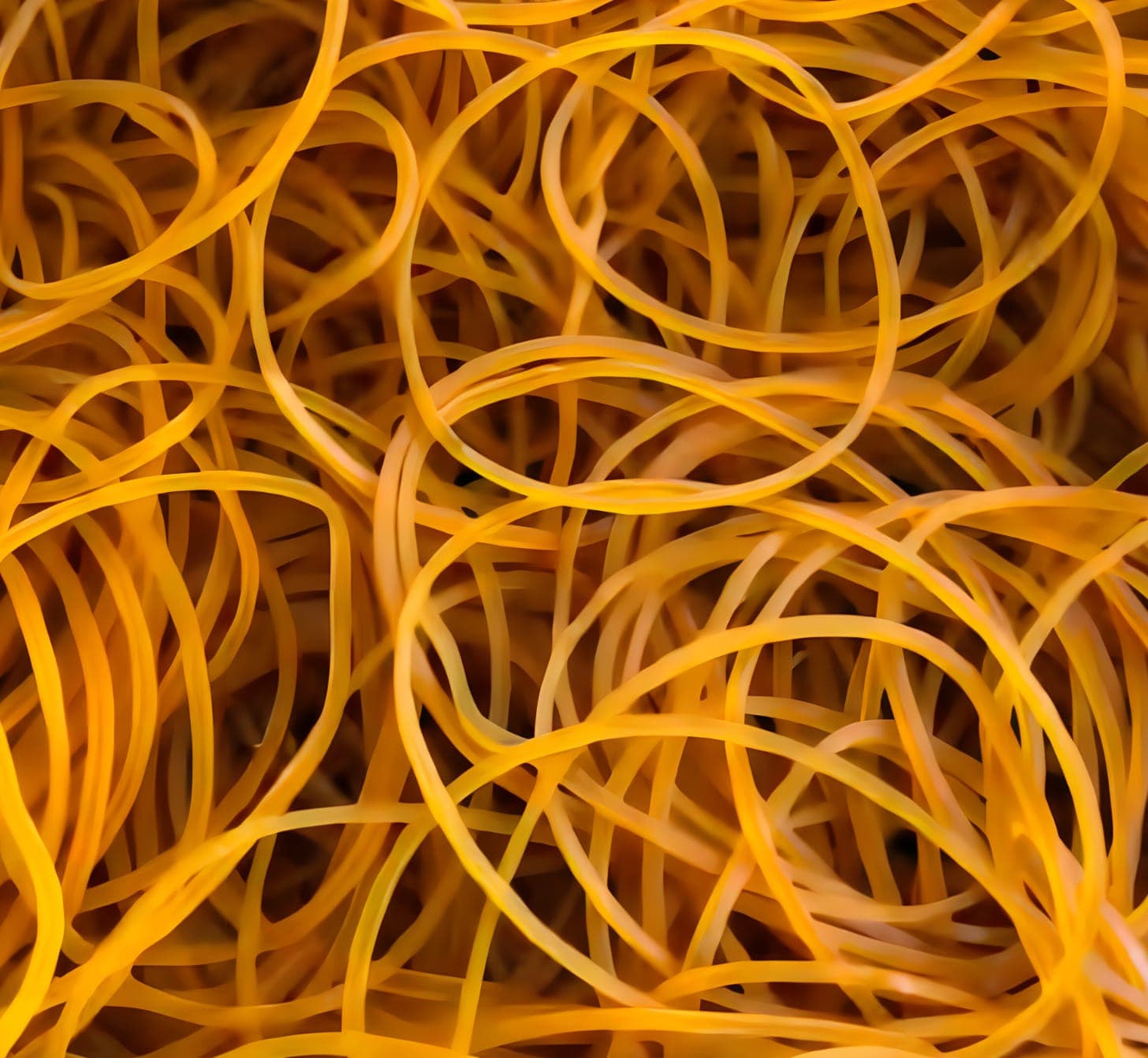
Our classic multi-purpose bands. Available in various sizes and colors. Perfect for general packaging, office use, and bundling small items.
See Product
Frequently Asked Questions
Which is better, natural or synthetic rubber bands?
Do natural rubber bands degrade in sunlight?
Are natural rubber bands biodegradable?
Ready to Source Premium Rubber Bands?
Contact Maruey Rubber for pricing, samples, and custom OEM specifications. Over 30 years of manufacturing excellence from Thailand.