Why Thailand is the World's Best Source for Natural Rubber Bands
Key Takeaways
- Thailand produces roughly one-third of the world's natural rubber, and Thai manufacturers like Maruey Rubber export premium bands to 60+ countries.
- Rayong's industrial ecosystem combines decades of compounding and extrusion expertise for consistent export-grade quality.
- Direct access to Laem Chabang Port ensures fast and cost-efficient international logistics to 60+ countries.

Table of Contents
- Thailand's Climate: Why Hevea Brasiliensis Thrives Here
- A Mature, Reliable Rubber Supply Chain
- World-Class Rubber Band Manufacturing Infrastructure
- Laem Chabang Port - A Logistics Advantage for Global Buyers
- Cost-Competitive Without Compromising Quality
- The Superior Quality of Thai Natural Rubber
- Maruey Rubber - Thailand-Based Manufacturer Since 1992
- We currently export to **60+ countries** and produce:
- Frequently Asked Questions
- Ready to Source Rubber Bands from Thailand?
Thailand produces approximately 4.5 million tons of natural rubber per year - around one-third of the world's total supply. For businesses looking to buy wholesale rubber bands from Thailand for packaging, agriculture, logistics, or office use, that dominance is no accident. It is the result of ideal growing conditions, a century of industry expertise, and a manufacturing ecosystem built for global export.
This guide explains the advantages of Thai natural rubber for packaging and industrial use, why Thailand leads the global rubber band market, and why Thai natural rubber band manufacturers like Maruey Rubber - based in Rayong since 1992 - are the preferred supplier for buyers in over 60 countries.
Thailand's Climate: Why Hevea Brasiliensis Thrives Here
Natural rubber is derived from the Hevea brasiliensis tree, which requires a very specific set of growing conditions: consistent tropical rainfall, temperatures between 25–35°C, and high humidity year-round.
Thailand's southern and eastern provinces - including Surat Thani, Trang, Songkhla, and Rayong - deliver exactly that. Annual rainfall exceeds 2,000 mm, laterite soils provide optimal drainage, and the climate is stable year-round.
The Rubber Authority of Thailand (RAOT) has invested decades in agronomic research, producing high-yielding clonal tree varieties that maximize latex output per acre while preserving the molecular properties - particularly high cis-1,4-polyisoprene content - that give Thai natural rubber its superior elasticity and tensile strength.
A Mature, Reliable Rubber Supply Chain
Thailand has been cultivating rubber for over 100 years. The industry is not just large - it is deeply established. Every link in the supply chain is well-developed:
- Smallholder farms supply raw latex and cup lumps
- Processing facilities convert materials into standardized rubber sheets
- Rubber exchanges provide transparent pricing benchmarks
- Grading standards ensure consistency for international buyers
This maturity means fewer supply disruptions and greater reliability compared to rubber-producing countries with less established infrastructure. When sourcing rubber bands from Thailand, buyers benefit from a system that has been optimized for export-grade consistency over generations.
World-Class Rubber Band Manufacturing Infrastructure
Thailand's rubber advantage extends well beyond raw materials. The Eastern Seaboard Industrial Zone in Rayong Province is home to hundreds of rubber processing and manufacturing companies, creating a dense ecosystem of:
- Skilled workers with specialized rubber manufacturing expertise
- Equipment suppliers and maintenance networks
- Technical knowledge refined over decades
Producing high-quality rubber bands requires precise control over compounding, extrusion, vulcanization, and cutting. Thai manufacturers have developed proprietary methods to achieve consistent wall thickness, accurate diameter tolerances, and reliable tensile performance - knowledge built up through generations of factory engineers.
Laem Chabang Port - A Logistics Advantage for Global Buyers
One of Thailand's most underappreciated competitive advantages is its access to Laem Chabang Port, the country's largest deep-water container port and one of the busiest in Southeast Asia. Key logistics facts:
- Handles over 8 million TEUs annually
- Located approximately 120 km southeast of Bangkok
- Less than 2 hours by truck from Rayong's rubber manufacturing zone
This proximity enables rubber band manufacturers to load containers and ship to virtually any destination worldwide within days of production. Direct shipping routes connect Laem Chabang to major global ports, allowing exporters to ship high-quality export rubber bands from Laem Chabang to global markets with speed and reach that competitors in landlocked or less port-accessible regions simply cannot match.
Cost-Competitive Without Compromising Quality
Thailand's rubber band manufacturing cost structure is highly competitive, driven by three factors:
- Domestically sourced raw materials - no import duties or long-distance feedstock shipping
- Skilled but affordable labor - a deep talent pool in established industrial zones
- Efficient manufacturing infrastructure - refined over decades for export-scale production
This cost efficiency does not come at the expense of quality. Thai manufacturers invest in robust quality control systems - testing for elongation at break, tensile strength, aging resistance, and dimensional accuracy at every production stage. Rigorous quality-control regimes and compliance with international standards ensure Thai rubber bands meet the requirements of even the most demanding export markets.
The Superior Quality of Thai Natural Rubber
Thai natural rubber is globally recognized for its molecular performance. Key quality attributes include:
- High cis-1,4-polyisoprene content - enables exceptional elasticity; bands stretch to several times their resting length and return without permanent deformation
- Superior tensile strength - withstands repeated stretching without failure
- Excellent tear resistance - reliable under mechanical stress
- Strong aging resistance - longer shelf life under varying temperature and storage conditions
These properties make rubber bands manufactured from Thai natural rubber measurably superior to those made from lower-grade rubber or synthetic alternatives.
Maruey Rubber - Thailand-Based Manufacturer Since 1992
Maruey Rubber Co., Ltd. has been manufacturing rubber bands in Rayong, Thailand for over 30 years. Our facility sits in the heart of Thailand's rubber manufacturing zone, with direct access to:
- Premium Thai natural rubber from local plantations
- Skilled workers with decades of production expertise
- Laem Chabang Port for fast, reliable international shipping
We operate as a vertically integrated manufacturer - handling raw material procurement, compounding, extrusion, vulcanization, quality testing, packaging, and export logistics under one roof. This integration gives us full control over quality and cost at every stage.
We currently export to **60+ countries** and produce:
- Standard office and packaging rubber bands
- Heavy-duty pallet bands for warehouse logistics
- Custom OEM rubber bands with branded specifications
Frequently Asked Questions
Why source rubber bands from Thailand instead of other countries?
Thailand produces roughly one-third of the world's natural rubber, has a century-long manufacturing history, and offers direct access to one of Asia's largest export ports. The combination of raw material quality, manufacturing expertise, and logistics efficiency is unmatched globally.
What makes Thai natural rubber better for rubber bands?
Thai rubber has a high cis-1,4-polyisoprene content, which gives it superior elasticity, tensile strength, and aging resistance compared to lower-grade or synthetic alternatives.
Can Maruey Rubber manufacture custom rubber bands?
Yes. We produce OEM rubber bands in custom sizes, thicknesses, colors, and branded packaging for buyers worldwide.
Where does Maruey Rubber ship from?
Our products ship from Laem Chabang Port in Thailand, with direct routes to major ports across Asia, Europe, North America, and beyond.
Ready to Source Rubber Bands from Thailand?
If you are wondering where to source bulk natural rubber bands, Maruey Rubber has the capacity, capability, and 30-year track record to deliver. Contact us today to request a product catalogue, technical specifications, or a custom quotation.
Related Product
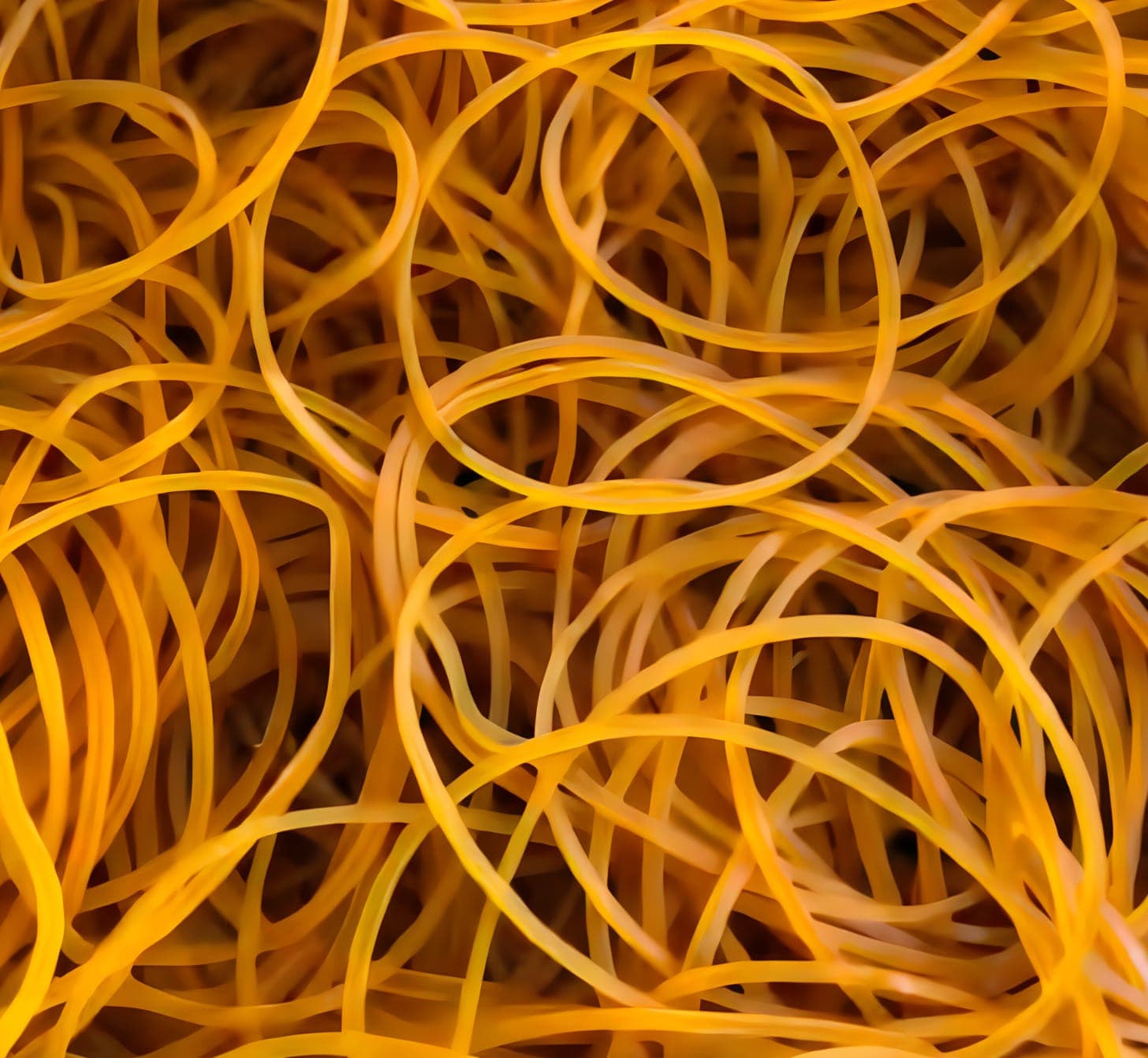
Rubber Band
The industry standard for versatile bundling and packaging
Our classic multi-purpose bands. Available in various sizes and colors. Perfect for general packaging, office use, and bundling small items.
See Product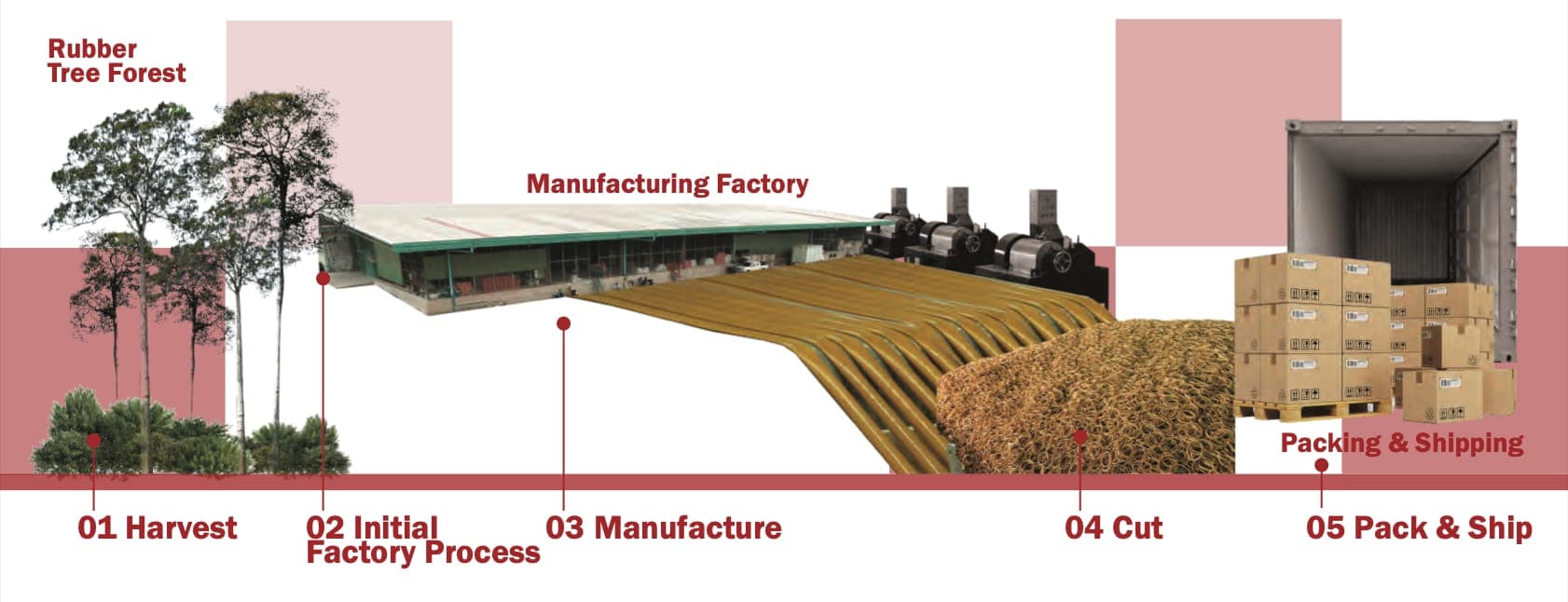
Frequently Asked Questions
Why are natural rubber bands from Thailand cheaper and more consistent than from other countries?
How much of the world's natural rubber comes from Thailand?
Which port do Thai rubber band exporters ship from?
Ready to Source Premium Rubber Bands?
Contact Maruey Rubber for pricing, samples, and custom OEM specifications. Over 30 years of manufacturing excellence from Thailand.