Industrial Rubber Bands: Sourcing for Food Packaging, Agriculture, and Fisheries
Key Takeaways
- Agriculture, fisheries, and food packaging need bands engineered for moisture, cold, and UV; rubber content from 60-100% latex determines durability and cost.
- Choosing the right rubber content (60% to 100% latex) ensures cost-efficiency while preventing snapping in harsh environments.
- Understanding local and export terminologies helps buyers identify the exact band width and thickness required for specialized uses.
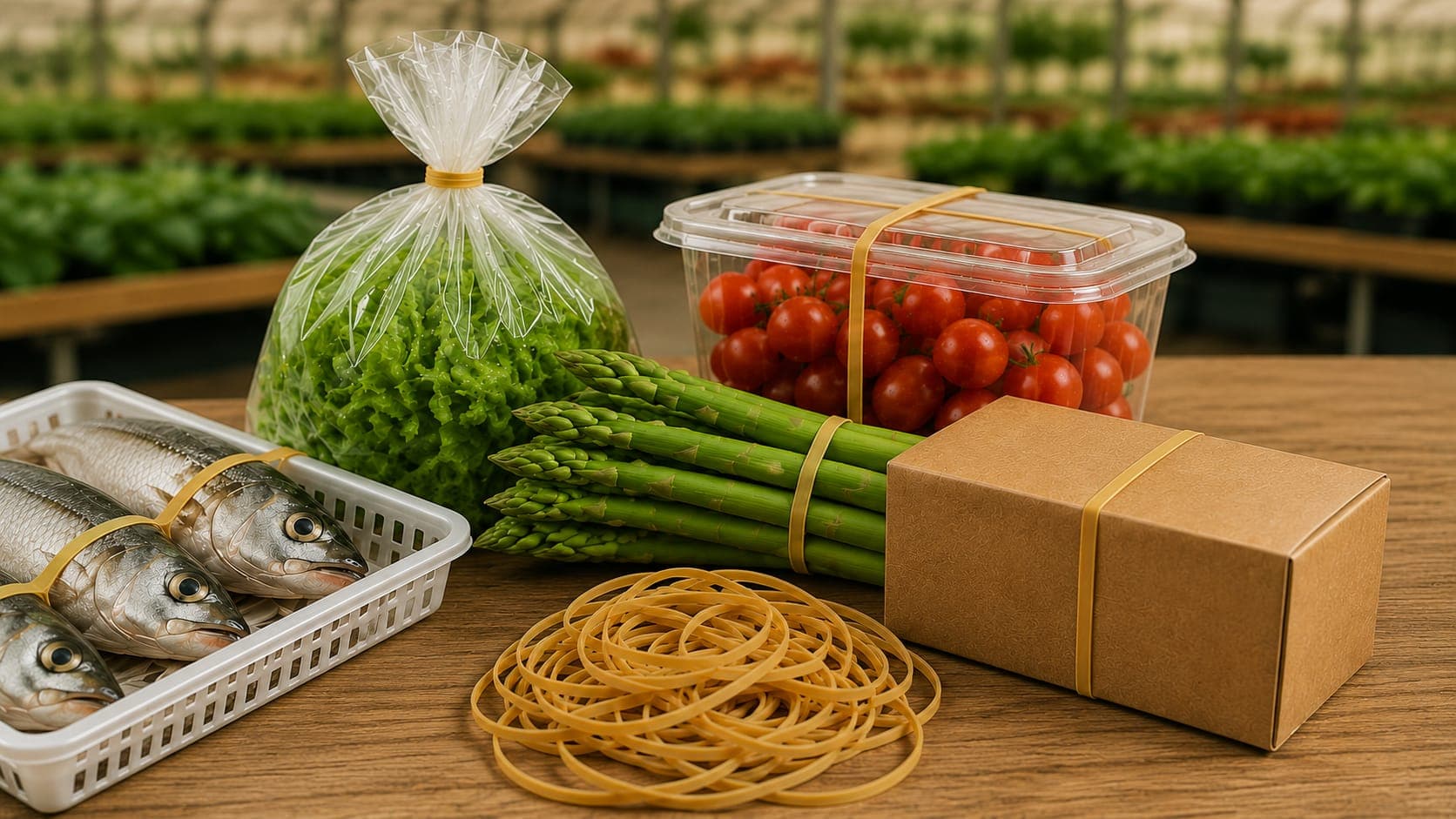
Table of Contents
In the world of B2B logistics, agriculture, and packaging, rubber bands are often the unsung heroes that keep supply chains moving. From securing warehouse cartons with pallet bands to sealing commercial food bags and produce, using specialized heavy duty rubber bands for commercial packaging is critical to meeting strict criteria for strength, flexibility, and chemical safety.
Using the wrong rubber band can result in snapped packaging, ruined crops, or compromised hygiene. This guide details how to choose and source the right industrial-grade rubber bands for food, farming, and marine applications.
Securing Wet and Cold Environments: Agriculture & Fisheries
Both the agricultural and fishery sectors place extreme demands on rubber fasteners. When harvesting crops like asparagus, broccoli, or flowers, growers need specialized UV resistant agricultural rubber bands for crops that can hold up against continuous water spraying, soil acidity, and outdoor UV exposure. If you use poor-grade bands, they will dry out, crack, and fail on the store shelf.
Similarly, in seafood harvesting and crab processing, rubber bands operate in wet, salty, and refrigerated conditions. We manufacture cold resistant rubber bands for seafood packaging that are formulated to maintain their elastic memory and grip in freezing temperatures. They are made from high-grade natural rubber and every production batch is mechanically tested for consistency.
Which Band Specification Fits Each Industry?
Every industrial buyer eventually asks the same question: which exact band do I order? The answer depends on three variables - the environment the band works in, how long it must hold, and what it is holding. The table below summarizes the specifications we most commonly ship for each sector.
| Application | Conditions | Recommended band | Specification notes |
|---|---|---|---|
| Food bag sealing | Indoor, dry, short cycle | Standard natural rubber band | 100% latex for maximum snap-back; narrow widths (1-3 mm) |
| Produce bundling (asparagus, broccoli) | Wet, refrigerated, retail shelf life | Wide natural or compound band | Wider cross-sections (6-15 mm) spread pressure and prevent bruising |
| Flowers and delicate stems | Outdoor to cold chain | Corner band with anchor tab | Anchor tab distributes tension; green or natural color |
| Seafood and crab processing | Wet, salty, freezing | Cold-formulated natural band | Compound tuned to keep elasticity below 0 C; batch-tested |
| Field agriculture | Prolonged sun and soil contact | Compound band (60-90% latex) | UV-resistant additives; biodegradable in soil |
| Warehouse kitting | Indoor, high reuse | Standard or X-band | Choose size for 50-70% stretch at rest on the bundle |
How Do Rubber Bands Perform in Cold Storage?
Natural rubber stays elastic well below freezing, but two effects matter for cold-chain buyers. First, elasticity temporarily drops as temperature falls: a band stretched at -10 C exerts less holding force than the same band at room temperature, so cold-chain applications should size bands for a tighter fit. Second, bands that are stretched, frozen, and thawed repeatedly age faster than bands held at constant temperature - which is why sample testing should mimic your real freeze-thaw cycle, not just a single cold soak.
Every Maruey production batch is mechanically tested for elongation and tensile strength before shipment, and cold-application customers can request test data for their specific compound. For a deeper look at how compounding changes band behavior, see our guide to natural vs. synthetic rubber bands.
Are Industrial Rubber Bands Food Safe?
This is the most common compliance question we receive, and it deserves a direct answer. Our bands are well suited to food-adjacent tasks: bundling packaged produce, closing bags and securing closed containers. If your process requires certified direct-contact elastomers, specify a certified food-grade silicone product instead - and be wary of any supplier who claims certification without documentation.
Selecting the Right Rubber Content
Rubber band purity ranges from 60% up to 100% natural rubber content. While 100% natural latex provides the absolute best elongation (elongation at break of at least 600% of resting length), compound bands with added polymers are often selected for outdoor agricultural use where UV resistance and cost-competitiveness are primary considerations.
For heavy-duty bag sealing and packaging, utilizing standard natural rubber bands provides the snapping force and reliability required to seal bags airtight. For delicate produce, using high-quality vegetable bundling rubber bands wholesale or broad corner bands distributes tension evenly over a larger surface area to prevent bruising.
How to Test Bands Before a Bulk Order
Because industrial failures are expensive, we recommend every new B2B customer run a simple four-step test on free samples before committing to a container order:
- Stretch test: stretch a sample of bands to the working diameter you actually use and hold for 48 hours. Look for necking, whitening, or set (failure to snap back).
- Environment test: put banded product through your real conditions - cold room, washdown, outdoor rack - for a full cycle, not a shortened one.
- Line test: run bands through your applicator or manual line for speed and breakage rate; a good band should apply in seconds without misfeeds.
- Shelf test: keep a banded sample on a shelf for the full retail or storage life of your product and inspect for cracking or marking.
Maruey Rubber provides free samples (up to 1 kg of assorted sizes) to qualified B2B buyers precisely for this purpose - request samples here.
Summary of Sourcing Recommendations
When sourcing industrial rubber bands:
- Ensure the compounding formula contains UV and cold-resistant additives.
- Request test certification for elongation under low temperatures.
- Opt for bulk packaging like 30 kg PP woven sacks to reduce shipping costs.
Ready to source premium agricultural or food-adjacent packaging bands? Check out our range of natural rubber bands or request information on our custom agricultural line.
Related Product
Rubber Band
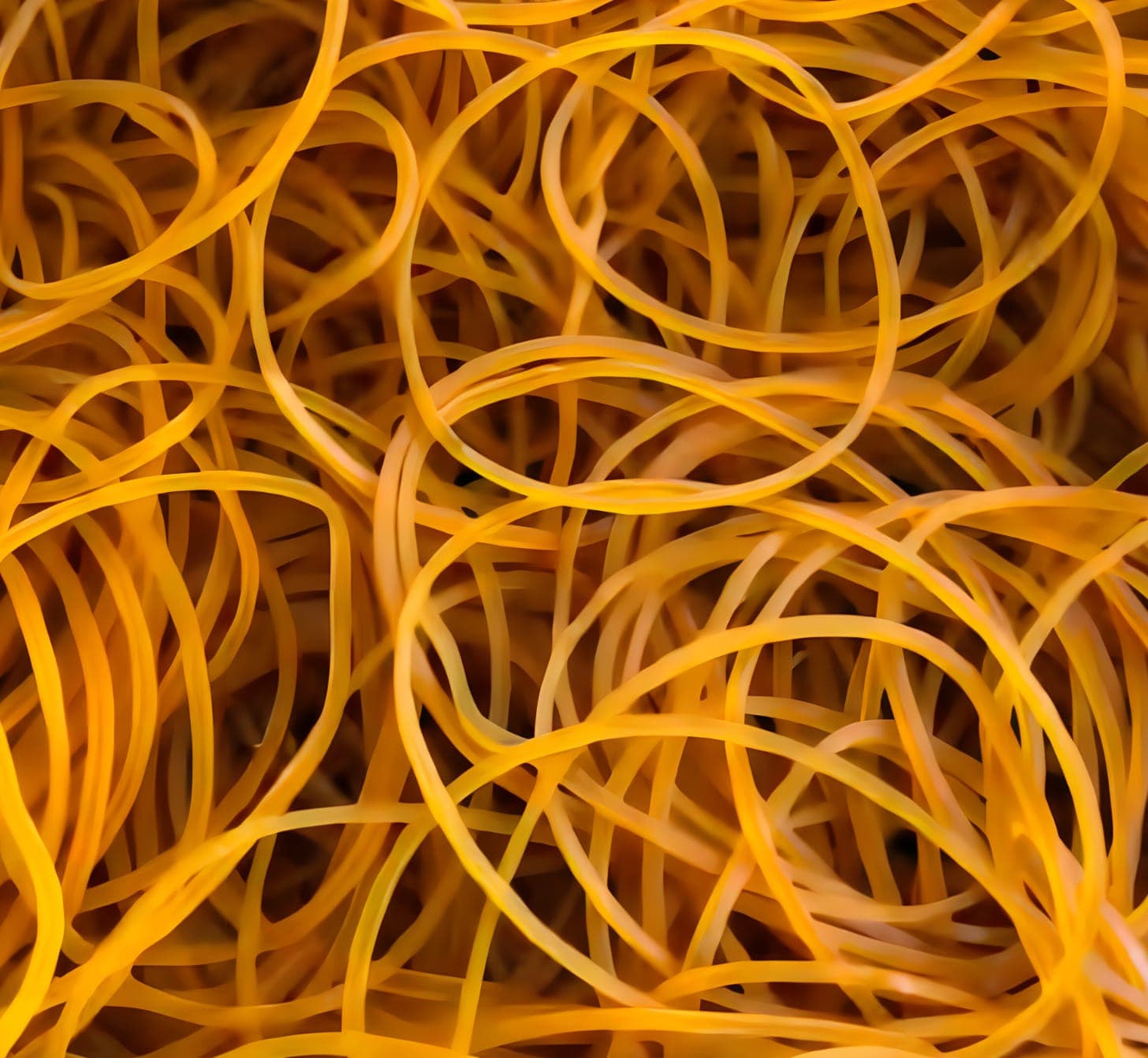
The industry standard for versatile bundling and packaging
Our classic multi-purpose bands. Available in various sizes and colors. Perfect for general packaging, office use, and bundling small items.
See Product
Frequently Asked Questions
Can rubber bands be used in food packaging?
What rubber content should I choose for agricultural or fishery use?
How do I test rubber bands before placing a bulk order?
Ready to Source Premium Rubber Bands?
Contact Maruey Rubber for pricing, samples, and custom OEM specifications. Over 30 years of manufacturing excellence from Thailand.